

Dental company comparison • Entry conditions matter

A dental company can fit one pet and fail another

Compare dental insurers with a separate eligibility answer for each animal. A convenient shared company does not make different dental histories interchangeable.

An owner checking veterinary papers and a calculator with a cat nearby
✓ Policy-first ✓ Independent ✓ Useful checks
Direct answer
The useful company comparison starts with the individual pet: trauma, illness or cleaning, known findings, age and required records. When choosing for more than one animal, evaluate each separately before choosing a common provider. A company that fits a young cat’s dental need may not offer the same useful protection to an older dog.
FAQ

Four company names, different starting questions

Company Current evidence worth examining Do not infer
Embrace Its coverage overview describes eligible dental illness with a $1,000 annual sublimit. That the general medical limit replaces the dental-specific limit.
Pets Best Its dental tool applies condition-specific age and history tests. That every tooth, procedure and policy version has the same rules.
AKC Pet Insurance Its FAQ distinguishes accidental broken-permanent-tooth extraction from the optional routine-cleaning benefit. That a cleaning option establishes broad dental-disease treatment.

The table is an investigation shortlist, not a ranking of all dental insurers. We did not collect personalized offers, examine a real pet or establish a current treatment’s eligibility. The actual state form and selected benefits take priority over a company-level yes/no box.

Start with the clinical reason for care: trauma, disease or routine prevention. Then ask whether the company can issue a relevant benefit for this pet. An extraction is a procedure name and can arise for different reasons; it does not identify the controlling coverage category.
What to know

Build two dental profiles before asking for a household recommendation

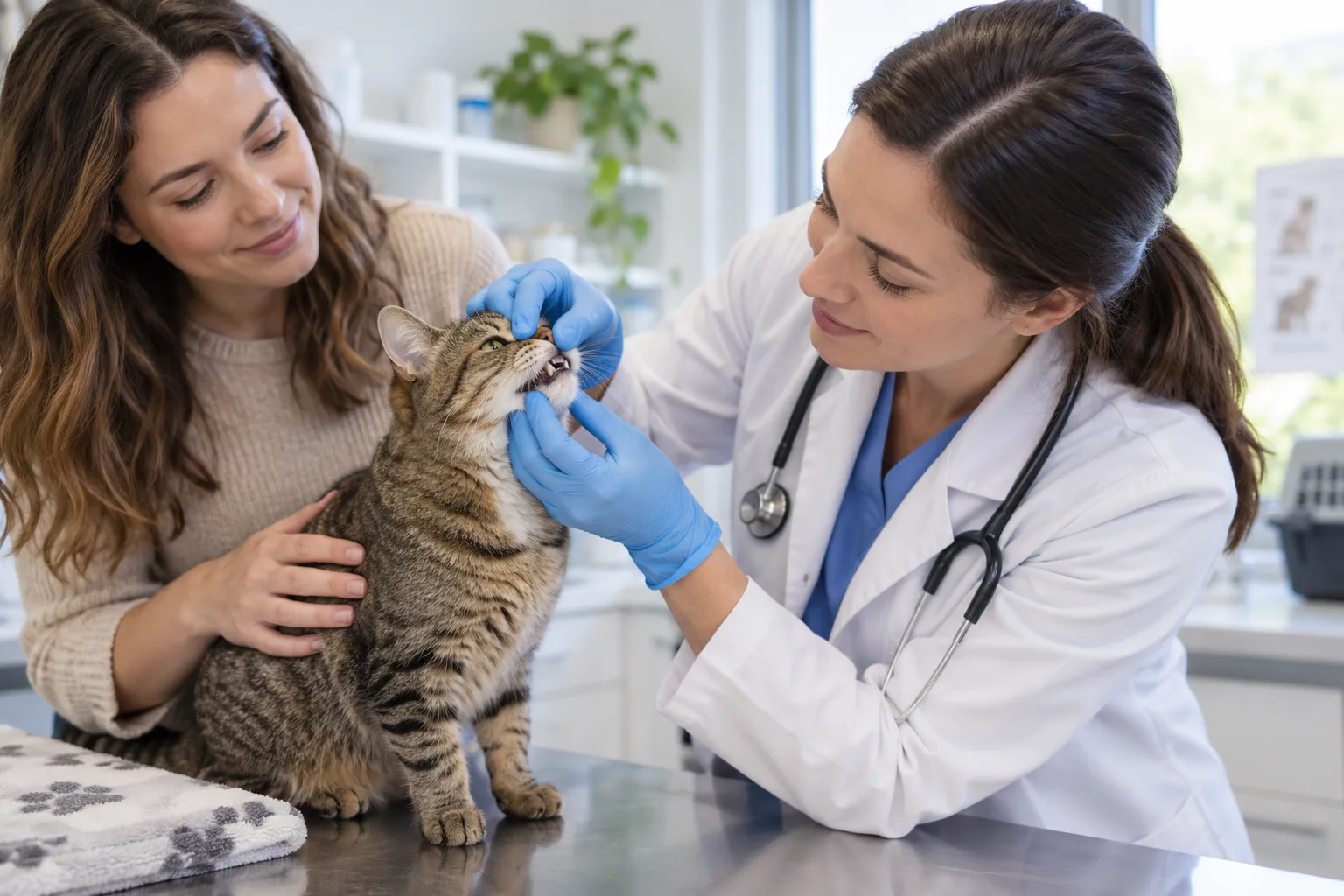
Veterinary professional examining a cat’s mouth with its owner nearby
The clinical record and exact dental option can matter more than the company logo.
Illustrative animal What the company must answer What another pet’s answer cannot prove
A young cat with earlier dental findings Whether the exact offered option can address that history at this age and location. That the dog’s existing benefit also applies to the cat.
An older dog already carrying a dental option What continues under the existing contract and what a new offer would require. That a favorable new-cat quote makes replacing the dog’s policy safe.

These are hypothetical profiles, not diagnoses or assumptions about your animals. Ask the veterinarian to identify the actual clinical reason for anticipated care, then request separate insurance answers. Keep policy numbers, records, effective dates and benefits distinct even if the same person pays both bills.

For Pets Best, the current dental tool includes condition-specific enrollment and dental-maintenance requirements; the offered state form must confirm the relevant rules. A prior cleaning record for one animal cannot satisfy another animal’s requirement. For AKC, a described accidental-tooth benefit is not evidence that the other pet’s periodontal disease is insured.

Compare

New entry and continued dental protection are different comparisons

It describes initial addition in the stated zero-to-three age range and continuous retention afterward, alongside location, preventive-care and new-policy waiting conditions. Do not assume an older dog can newly enter merely because an already enrolled dog can continue.

Its separate Dental Illness option excludes routine cleaning and pre-existing dental conditions and applies a deductible. Those statements belong to that named option. Confirm the exact entry boundary, annual benefit and offered terms for each pet.

Thus a younger cat and an older dog might receive different answers from the same company. The correct comparison may involve a new offer for the cat and keeping the dog’s existing benefit. This is a reason to ask, not a statement that either animal qualifies.

Compare

Compare three company arrangements, not one combined yes/no

Result of separate checks Reasonable next comparison
One company offers suitable documented benefits for both pets Compare its complete two-policy cost and service convenience with other suitable arrangements.
Different companies fit the two records better Compare separate providers rather than forcing a shared-brand winner.
One pet’s needed care remains excluded or unresolved Keep that funding gap visible; do not let the other pet’s good offer conceal it.

Do not assume a multi-pet discount exists, applies to every component or outweighs a missing dental benefit. Obtain any actual discount in the written price after the medical and dental needs are met. Convenience is a real preference, but it is not coverage.

Keep limits separate unless the actual contract expressly pools them. An unused allowance for one pet does not become money available for the other just because the provider is the same. Equally, do not count the general medical limit as dental capacity without checking the applicable sublimit.

The named companies in this guide are investigation candidates. No individualized household quote, policy change or coverage approval was obtained. A common-provider result, a split-provider result and retaining existing protection can all be reasonable depending on the actual evidence.

Coverage

Finish with a separate written answer for every intended benefit

  • Which animal and which exact dental option the response concerns.
  • The cause and procedure addressed, with known history disclosed accurately.
  • Any entry-age, maintenance, waiting or continuity condition.
  • The eligible share, deductible and applicable benefit ceiling.
  • Which services remain outside the benefit, including any routine cleaning question.
  • Whether replacing or removing an existing option changes the ability to retain it.

Embrace’s current overview describes a separate dental-illness sublimit. It can be a useful candidate when that benefit meets the pet’s need, but the overall medical maximum should not be substituted for the dental amount. Obtain the actual offered wording for trauma and disease rather than assigning one company-wide cap to every oral condition.

If care is already recommended, arrange its funding with the practice while asking what legitimate existing or newly available benefit might apply. Do not delay necessary treatment or relabel the care to fit a preferred company. The best company answer is specific to the pet and benefit, even when the household ultimately chooses one provider.

Evidence

Sources and policy context

These public references support the consumer or veterinary context. Named insurer details were checked in official product materials; the policy offered for your pet and state determines the actual terms.

Next step

Compare Current Pet Insurance Rates

Check current options for your pet and location, then compare the policy details, exclusions, costs, and eligibility before choosing.

Compare the policy before you choose Check the actual offer, exclusions and out-of-pocket terms.
See Rate Options